
How 3D Scanning Is Transforming the Future of Art: Protection, Activation & Sustainable Value Creation
The world of cultural heritage is reaching a turning point.
Museums, collectors, and institutions are facing the same structural challenges they’ve had for decades, rising conservation costs, limited access, storage overflow, outdated documentation methods, and the absence of scalable revenue models.
At the same time, global audiences are more digitally engaged than ever, expecting deeper, more interactive cultural experiences.
Between these two realities lies a massive opportunity.
3D scanning technology has emerged as one of the most powerful innovations for the cultural sector: a tool capable of redefining how we preserve, understand, and activate artworks.
This article explores why 3D scanning matters, how AerariumChain is pioneering its application, and what it means for the future of cultural heritage.
Why Most Art Remains Invisible, and Why That Must Change
It’s one of the cultural sector’s most shocking statistics:
Nearly 90% of the world’s artworks sit in storage, unseen by the public, and often unmonitored by institutions.
This invisibility creates four systemic problems:
1. Limited access and audience reach
If artworks remain in archives, their educational, cultural, and experiential value is essentially lost.
2. High conservation costs
Art stored improperly or moved frequently is vulnerable to micro-damage — yet manual inspection is slow and inconsistent.
3. Outdated documentation
Photography and condition reports fail to capture full geometry, surface behavior, or micro-changes over time.
4. Zero scalable monetization
When artworks aren’t visible, they can’t generate revenue for conservation — leaving institutions dependent on grants, donors, and ticket sales.
This is the gap 3D scanning finally solves.
What Is 3D Scanning in the Context of Cultural Heritage?
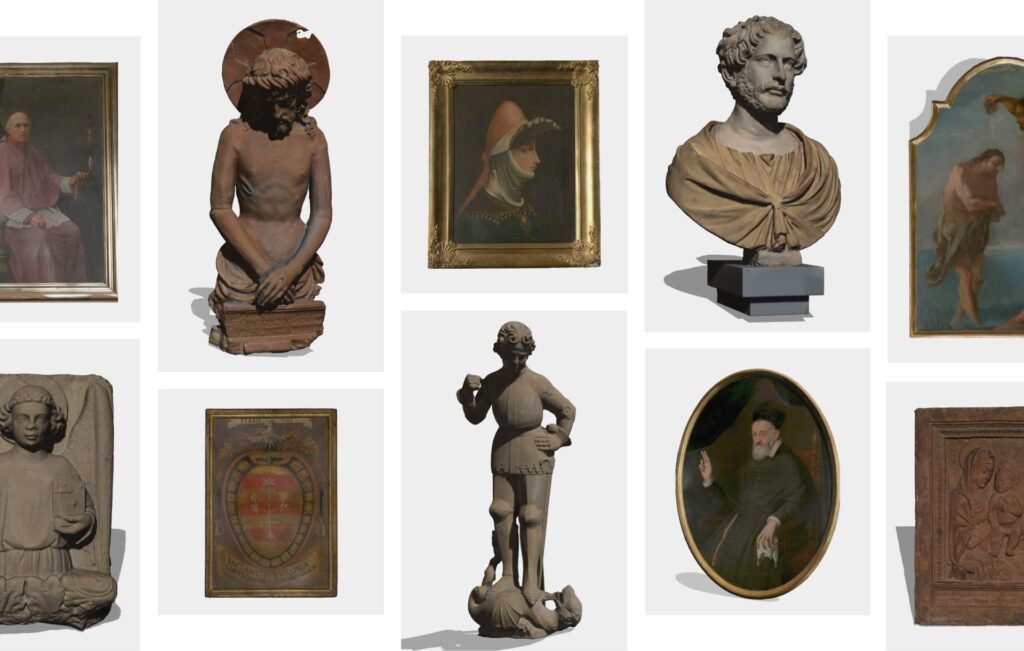
3D scanning creates a high-fidelity digital twin of an artwork — a precise, measurable, time-stamped model capturing:
Geometry
Texture
Material behavior
Light interaction
Surface micro-patterns
Structural evolution over time
Unlike standard photography or cataloguing, a digital twin becomes:
A preservation record
A research tool
A content engine
A foundation for digital experiences
A revenue-generating asset
3D scanning does not replace the artwork — it expands its reach and safeguards its integrity.
Why 3D Scanning Is Now a Non-Negotiable Innovation for Museums
For the past century, documentation has changed very little. Conservation teams rely on:
Notes
Photos
Periodic manual inspections
These methods are slow, subjective, and incomplete.
3D scanning, by contrast, introduces a scientific layer:
a repeatable, measurable, objective visual record.
Three breakthroughs make 3D scanning unavoidable today:
1. Accuracy at the micrometer level
Institutions can detect cracks, texture shifts, and bumps invisible to the human eye.
2. Time-stamped comparability
Scanning before and after exhibitions, loans, or transportation creates a transparent chain of custody.
3. Remote monitoring and digital analysis
Teams can identify deterioration early — saving time, resources, and future restoration costs.
In a sector driven by preservation, these capabilities are nothing short of revolutionary.
The AerariumChain Framework: Protection, Activation & Sustainability
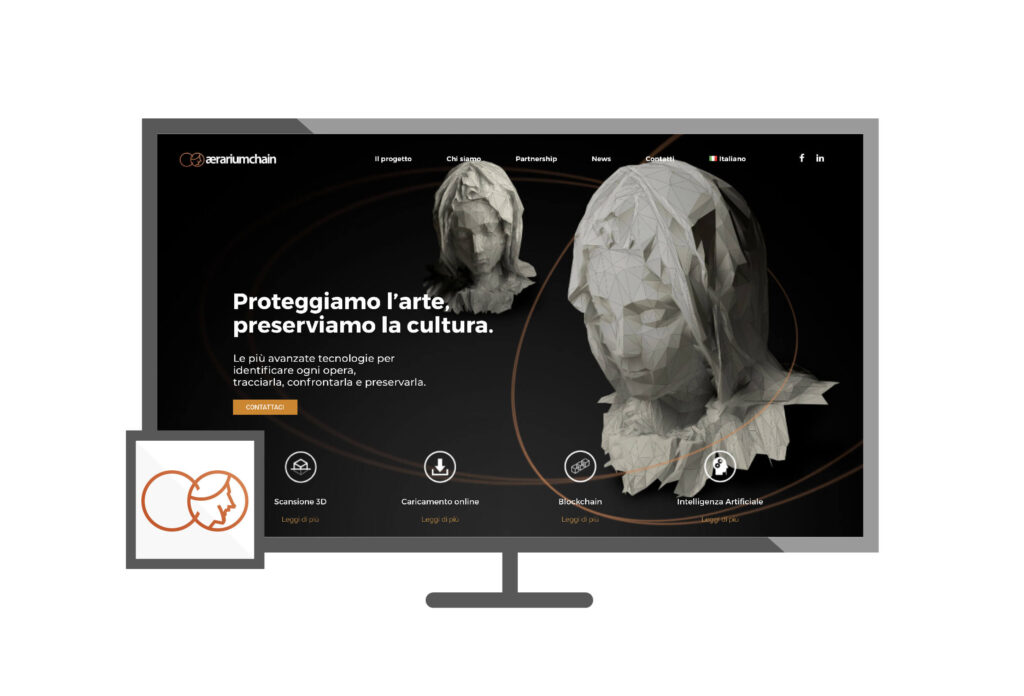
AerariumChain is one of the few solutions that integrates 3D scanning, AI, and blockchain into a unified platform specifically designed for the cultural sector.
Its model is built around three core pillars that respond directly to institutional pain points:
Pillar 1 Protection: Measuring What Matters
You can’t preserve what you can’t measure.
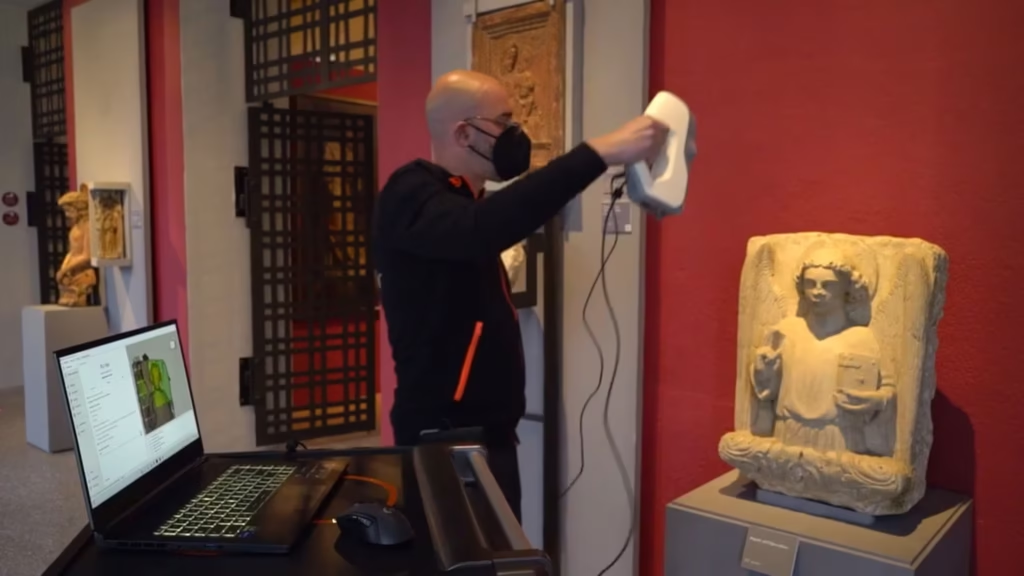
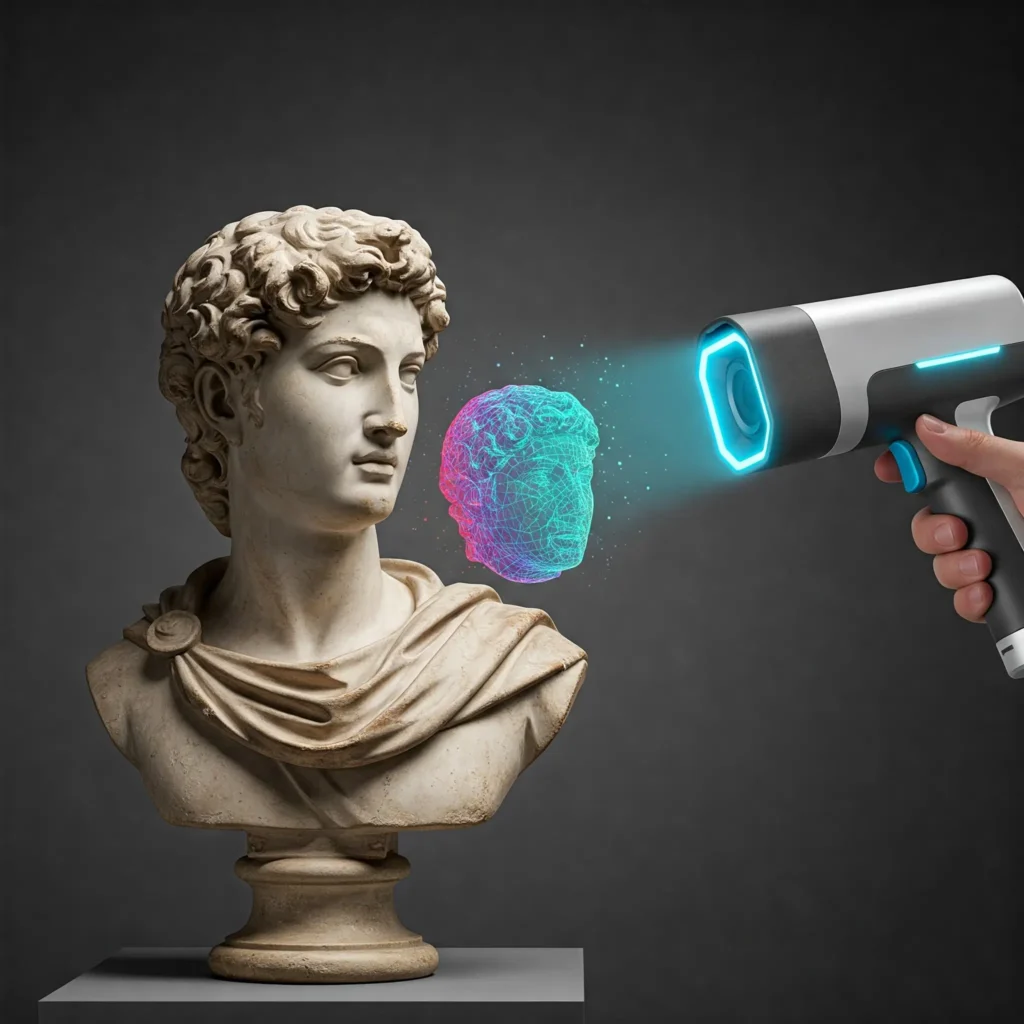
AerariumChain uses structured-light 3D scanning combined with AI analysis to detect even the smallest variations in an artwork’s condition. This allows museums and collectors to:
1. Detect damage instantly
Comparing scans before and after transportation or exhibitions reveals:
Micro-cracks
Surface deformation
Varnish shifts
Color changes
Dust accumulation
Texture anomalies
2. Reduce conservation costs
By tracking deterioration early, institutions avoid expensive last-minute restoration.
3. Build digital provenance
Every scan receives a blockchain time-stamp, guaranteeing a secure condition record.
4. Enable remote supervision
Conservators can log into the AerariumChain Hub and review all condition data from anywhere in the world.
This is preservation redesigned for the 21st century.
Pillar 2 Activation: Turning Art Into Experience
Digitized art becomes experienced art.
Once an artwork has a high-resolution digital twin, an entirely new universe of possibilities opens up.
Museums and institutions can instantly create:
Professional photos & videos without reshoots
Educational content
Interactive online displays
Tactile replicas for visually impaired visitors
High-quality reproductions for exhibitions or merchandising
Immersive VR or AR experiences
Curatorial experiments without physical risk
Hidden artworks, the 90% in storage, can finally become visible to global audiences.
This activation layer is critical for institutions seeking to build:
Digital engagement
Educational impact
New-generation museum experiences
International reach
Pillar 3 Sustainability: New Revenue for Cultural Preservation
One of the biggest challenges for museums is funding. Traditional income streams, ticketing, sponsorships, donors, are limited and unpredictable.
AerariumChain introduces NFT Micro, a new model for digital access:
How NFT Micro works:
Visitors pay cents for a micro-transaction
They unlock the 3D digital twin in high resolution
Museums earn recurring revenue from every access
This turns “digital visibility” into a sustainable preservation engine.
Why this matters:
Revenue is not tied to physical visitors
Collections become financially resilient
Even stored artworks contribute to funding
Engagement expands beyond geographic limitations
For the first time, digital value directly funds physical preservation.

The Technology Powering AerariumChain
AerariumChain integrates three advanced technologies:
1. Structured-light 3D scanning
Captures micro-geometry with unparalleled accuracy.
2. Artificial intelligence
Runs comparative analysis, detects anomalies, and predicts patterns of deterioration.
3. Blockchain infrastructure
Creates immutable time-stamped records for:
Provenance
Condition reports
Exhibition history
Transportation events
All scans upload to the AerariumChain Hub, where conservators and institutions:
Monitor artworks
Manage metadata
Analyze changes
Export reports
Generate activations
This ecosystem bridges physical art and digital innovation seamlessly.
Why Every Museum, Collector, and Institution Should Pay Attention
3D scanning is not emerging technology anymore, it’s a strategic necessity.
It directly addresses the industry’s most persistent problems:
Problem: Lack of visibility
Solution: Digital twins accessible anywhere.
Problem: High conservation costs
Solution: Early detection through AI + comparative scans.
Problem: Limited audience reach
Solution: Scalable digital experiences and content.
Problem: No digital strategy
Solution: A unified platform integrating scanning, analytics, and activation.
Problem: No new funding models
Solution: NFT Micro and digital micro-monetization.
The institutions that integrate 3D scanning today will become the cultural leaders of tomorrow.
The Future: Art That Is Visible, Measurable, and Valuable
We are entering a new era where every artwork — from masterpieces to stored archival pieces — deserves:
Visibility
Measurement
Protection
Accessibility
Financial sustainability
3D scanning is not just another tech tool.
It is the new language of cultural heritage.
Museums, collectors, and institutions that adopt it will unlock value far beyond protection — they will expand what art can mean in a digital world.
Conclusion: A New Standard for Cultural Heritage
From Michelangelo to Frida Kahlo to little-known regional works, every piece of art contains stories worth preserving, studying, and experiencing.
3D scanning transforms this from an aspiration into a system — one that:
Protects
Activates
Generates value
This is how cultural heritage enters the future:
visible, measurable, and sustainable.