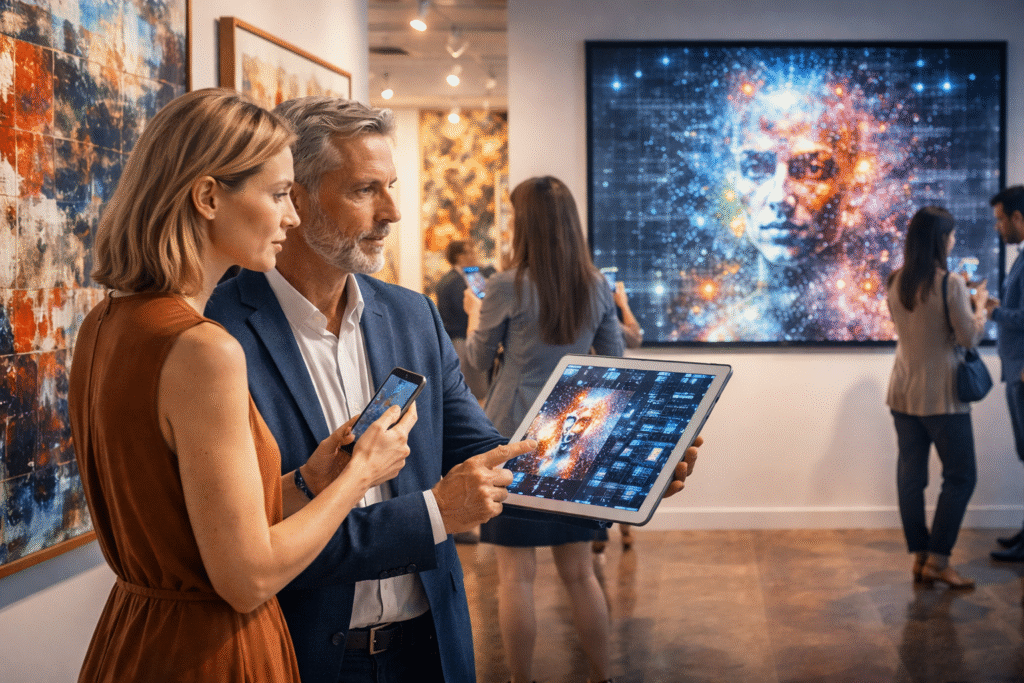
As 2026 unfolds, the art world finds itself at a pivotal moment. After years of rapid digital disruption, the conversation is evolving. The question is no longer whether institutions, artists, and collectors should engage with technology, but how these tools can be integrated thoughtfully, so they illuminate rather than overshadow our shared cultural heritage.
Technology is no longer an external force pressing upon the art world; it has become embedded within it. The challenge ahead lies in ensuring that innovation serves art’s essential purpose: to deepen human creativity, expand access, and preserve meaning.
From Hype to Integration
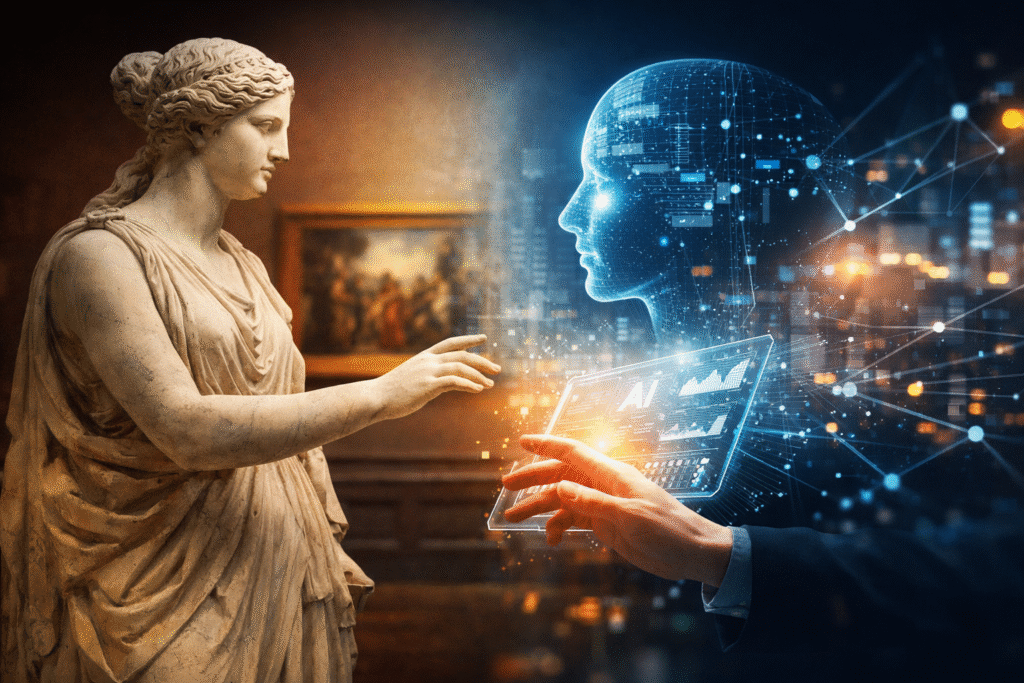
The art market, reshaped by the pandemic and accelerated digitisation, has entered a new phase of equilibrium. Digital works are now regularly acquired by a significant share of major collectors, while online sales account for a substantial portion of the global market. What once felt experimental has become structural.
Yet with this normalization comes a new responsibility. The allure of technological novelty must not eclipse the tangible, embodied relationship with art that lies at the heart of collecting. Screens, platforms, and algorithms can facilitate access, but they cannot replace the sensory and emotional power of physical works. Presence, scale, texture, and gesture remain fundamental to the experience of art—and they always will.
Artists Reasserting the Physical
One of the most compelling developments of this moment is the way artists are responding to the proliferation of AI-generated imagery. Rather than retreating from technology, many are actively engaging with it while simultaneously reaffirming art’s physical dimension.
This renewed emphasis on materiality is not a nostalgic return to the past. It is a conscious and often critical stance. By foregrounding matter, process, and gesture, artists assert their independence and authorship in a landscape increasingly shaped by automation.
While nearly half of emerging artists now incorporate AI into their practice, they do so to extend their creative horizons—not to substitute their vision. The most resonant works of 2026 will likely emerge from this tension: a dialogue between digital tools and physical expression, where technology expands possibility without dissolving intention.
Museums as Catalysts for Connection
Museums, too, are undergoing meaningful transformation. Across the world, institutions are adopting AI-driven tools for collection preservation, research, and visitor engagement. When these technologies are aligned with an institution’s mission and identity, the results can be remarkable—sometimes leading to dramatic increases in audience participation and accessibility.
However, the success of digital strategies depends on discernment. Technology should never be implemented for its own sake. The most promising institutional models embrace what might be described as a polyphonic architecture: multiple interpretive layers and points of entry that accommodate diverse perspectives, while preserving curatorial authority.
In this framework, meaning does not reside in algorithms alone. It emerges through a dynamic interplay between institutions, audiences, and digital tools—guided by curatorial intelligence and cultural responsibility.
The Evolving Role of the Collector
Collectors today operate within a rapidly changing ecosystem. Younger generations are reshaping acquisition patterns, with many purchasing directly from artists and discovering works through social platforms. This shift has contributed to a more open and democratic art market, reducing reliance on traditional intermediaries.
At the same time, it introduces new complexities. Questions of authenticity, authorship, rights management, and ethics—particularly in relation to AI-influenced works—require renewed attention. Collecting in this environment demands not only curiosity, but also vigilance and critical awareness.
Documenting artists’ responses to these transformations has become essential. In contexts such as Chinese contemporary art, the most compelling practices are those that interrogate technology rather than merely adopting it. Every tool carries assumptions, and the most vital works are those that expose, challenge, and reframe them.
Optimism Tempered with Prudence
We now navigate between two powerful forces: technology’s capacity to broaden access to art, and the risk of reducing it to data, spectacle, or entertainment. The institutions that will thrive are those that harness digital tools to expand reach while safeguarding the contemplative space that distinguishes art from information.
These tensions will not disappear. They are structural, and they will continue to shape cultural production in the years ahead. Yet with humility, curiosity, and a sustained commitment to the human experience, artists, institutions, and collectors can ensure that technology elevates rather than eclipses art’s enduring mystery.
In doing so, we may find that the true power of art in 2026 lies not in resisting technology, but in placing it firmly—and responsibly—in service of meaning.