
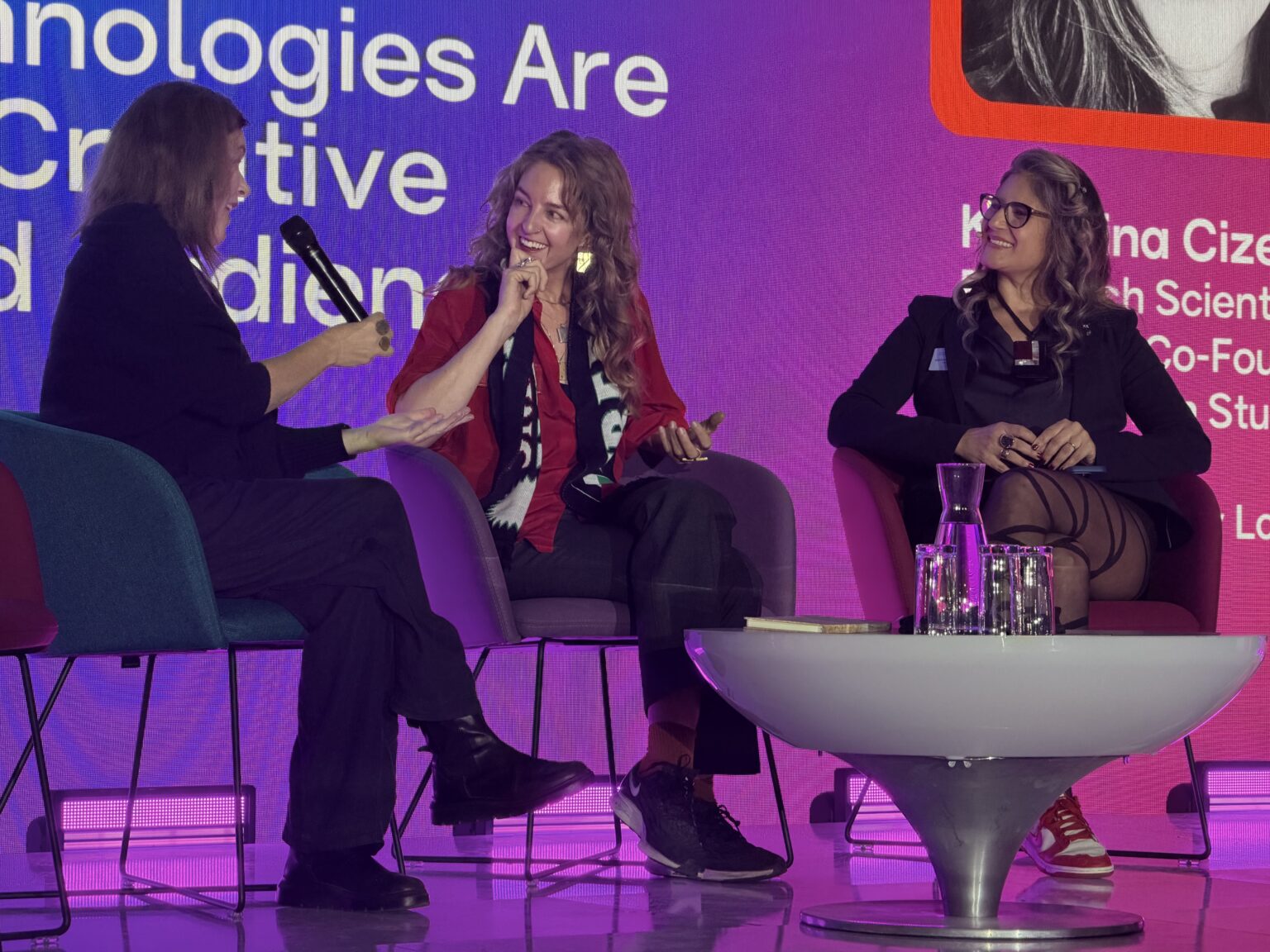
Photo creadits: Axel Dietrich
Gabriella Chihan on XR maturity, cultural responsibility, and why the tools always follow the intention.
Gabriella Chihan has been in immersive technology long enough to remember when everyone was afraid of it. She founded vrisch, Vienna’s first production company dedicated to human-centered immersive experiences, and built XR Austria from a meetup into a community. Ten years in, she’s watched XR go from novelty to hype to something more interesting: a field that had to grow up. We talked about what that maturity looks like, what the sector still refuses to understand, and why the most important question in spatial technology has nothing to do with the technology.
Technology follows intention. Always.
Gabriella traces her path to a curious mix: a father who loved Radio Shack and theme parks, a mother who was a fine artist and the best student in every room, and a Syrian-Paraguayan grandmother who taught her that there are always more layers to read between the lines. None of them approved of a career in technology. “How are you going to take care of your house, husband, and kids?” they used to ask.
She did it anyway. She worked at McCann and Ogilvy in Paraguay while still studying, won a scholarship for a Master’s in Digital Arts at Pompeu Fabra in Barcelona, and eventually moved to Vienna with her filmmaker partner Axel to start vrisch. When you’re new in a city and starting a business, you need people. So she started an XR meetup to find them — and to build a platform for honest dialogue between creators and users, rather than tech demos that left people more confused than before.
What ties all of it together is something she’s believed since the beginning: the tools follow the intention. You can’t hand someone a hammer and call it a vision. The work always starts before the technology enters the room.
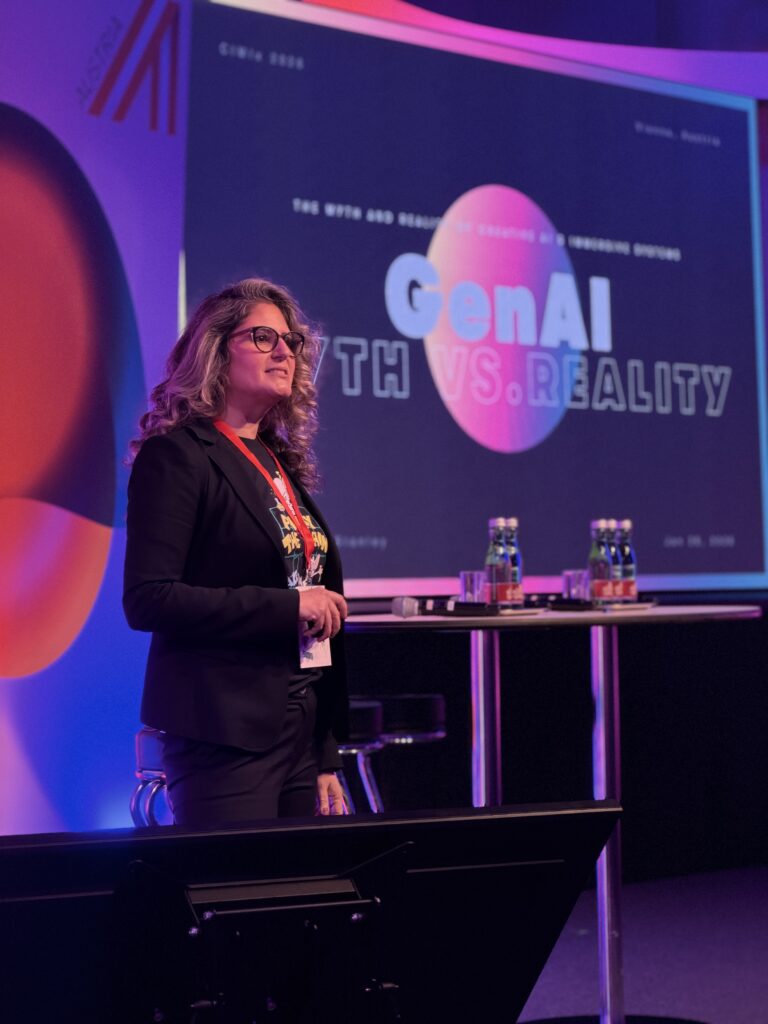
Photo creadits: Marko Kovic
“My mom was the brains of the operation. Best student. Fine artist. Rebel to the core. I inherited the curiosity and the stubbornness.”
XR didn’t die. It grew up.
Ten years ago, when Gabriella started, XR was a novelty. People were afraid of it, or they were overselling it — often both at once. The field was flooded with professionals who’d finished a handful of tutorials and called themselves experts. Clients came in with budgets referencing website costs and expectations referencing science fiction. The gap was brutal.
She sees the same pattern now with AI. The hype cycle is almost identical. But she’s watched what happens after the hype, and she’s not worried.
What emerged from the noise in XR was a field that got serious. Companies specialised. Communities built industry guidelines and codes of conduct. Interdisciplinary teams — performers, medical trainers, AR developers, researchers — stopped calling themselves “XR people” and started calling themselves what they actually were. The combination of XR and generative AI is now producing work of a quality and depth that the hype years never delivered.
“Some say XR is dead,” she says. “Quite the opposite. XR has transformed into a much more complex industry, established enough not to rely on hype or dreams. And I believe there’s still a lot to come from that maturity.”
We don’t need better hammers. We need better foundations.
At the CultTech Summit, Gabriella moderated a panel called “Storytelling the Futures” with Katerina Cizek and Sister Sylvester. The conversation kept returning to the same uncomfortable truth: we fear what we don’t understand, and we rush to use what we don’t understand even faster.
The analogy she used in the session stuck with the room: if you want to build a house, you can’t only listen to people who speak glories about the hammer. You need a solid foundation. You need different tools for different things. You need the right people, compatible in both talent and attitude.
What the panel surfaced was a real desire to challenge the tools of creative expression — from a place of understanding, not fear. And to stop treating hyper-customisation in technology as separate from hyper-customisation in artistic expression. The two are the same conversation.
Culture is no longer static. Neither should heritage be.
The roundtable on spatial storytelling and cultural heritage left Gabriella with a question she couldn’t shake: what will cultural heritage even mean in the years to come?
Wars, climate displacement, hybrid-culture families — the world is in motion. The people living between cultures, between countries, between identities, are building something that existing preservation systems weren’t designed to hold. Memory, belonging, and culture are all changing. The frameworks we use to protect them haven’t caught up.
She’s currently working on a research project, shrine, that sits directly in that gap: combining participatory processes, migrant studies, storytelling, art, and technology to build systems for cultural preservation through AI-powered immersive experiences. Focused on people living between cultures and identities, the project explores how XR and AI can preserve memory, belonging, and hybrid cultural narratives in ways traditional archives cannot. shrine is currently seeking funding and strategic collaborators to support its next stage of development.
What she found in the roundtable: she wasn’t sitting alone with those thoughts. That, she says, was the most rewarding part.
“What will culture mean in a world shaped by wars, climate displacement, and hybrid-identity families? We need to ask that question now.”
The real power of XR is making the invisible experiential.
When Gabriella talks about XR’s biggest opportunity, she’s not talking about meditation apps or calming landscapes. She’s talking about places of reflection.
Memory. Ecology. Identity. Time. These are things you can’t fully grasp from the outside. XR, when it’s designed for presence rather than stimulation, creates the conditions for people to inhabit them — to be inside complexity rather than observing it. That’s a rare thing. Most media can’t sustain the kind of attention and inward focus that makes that possible.
The impact emerges when XR stops trying to simulate empathy and starts offering spatial frameworks where reflection, connection, and meaning can take shape on the user’s own terms. That’s a completely different design brief.
Spatial tech treated as a one-off project will always underperform.
The pragmatic problem: cultural institutions keep commissioning immersive technology as a project, finishing it, and moving on. One exhibition. One pilot. No follow-through. The experience ends, the meaning dissipates, and nobody asks what happens next.
The deeper problem: the sector is still mostly thinking about representation. “Here, see this! Experience that! Be in these shoes!” It’s about showing. But the actual potential of spatial technology lies in sense-making, giving people environments where they can navigate complexity themselves, discover things at their own pace, return to something and find it differently the second time.
Until immersive systems are approached as infrastructure for reflection and participation, designed to be revisited and understood over time, their cultural value will stay artificially limited.
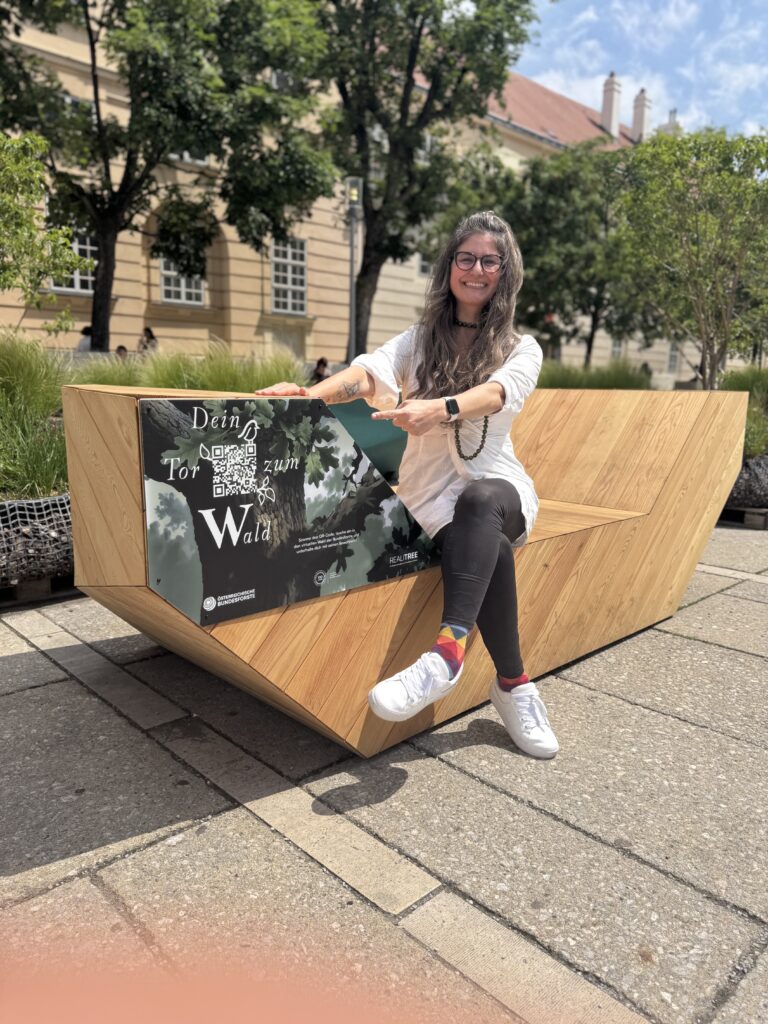
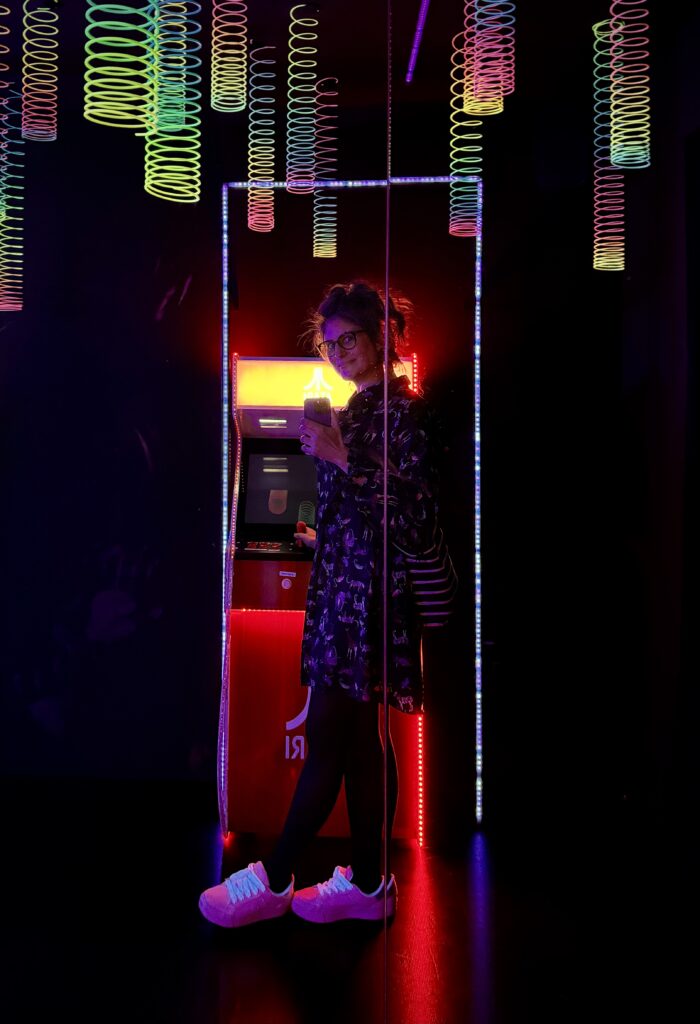
Photo creadits: Axel Dietrich
Innovation happens in the in-between.
People working at the intersection of culture and technology tend to fall outside existing systems. The work isn’t new — but the field still lacks shared language, visibility, and clear entry points. Communities like CultTech fill that gap. They make the intersection tangible to people discovering it for the first time, and legible to funders and institutions trying to understand what they’re looking at.
What Gabriella wants to see more of in the ecosystem: sustained collaboration between academia and the private sector, from day one, inside real projects. Researchers working alongside designers, technologists, ethicists, lawyers, policymakers, cultural practitioners — not as external reviewers brought in after decisions have already hardened into code.
The roles the ecosystem undervalues most are the ones focused on care, safety, and cultural translation. These determine whether a system is harmful or sustainable over time. And critically: those perspectives need to be accessible to small studios and independent professionals, not handed exclusively to institutions that can already afford the infrastructure.
Alongside her work through vrisch, Gabriella continues to advocate for immersive entertainment and human-centered XR experiences that bridge art, technology, and cultural preservation. Her current focus increasingly sits at the intersection of AI, immersive storytelling, and identity-driven cultural memory systems.
“Be a rebel. Ask uncomfortable questions. Embrace failure. There is no innovation otherwise, and you will find your crowd. I can guarantee you that.”
— Gabriella Chihan
Photo creadits: Elisabeth Dietrich