
Last updated: May 2026
$15 Billion Lost. Every Year.
Pierre-Alban Mulliez on the invisible royalties crisis, what Claimy is doing about it, and why the music industry’s missing money problem is finally fixable.
$15 billion in music royalties go uncollected every year. Not stolen. Not disputed. Just lost, in a system built for a different era, quietly failing the people it was supposed to serve. Pierre-Alban Mulliez, co-founder of Claimy, has spent years watching that failure up close. His company, born out of France’s music-tech ecosystem and now live in the US, is building the infrastructure to fix it: AI that audits catalogues, detects unclaimed streams, and files structured claims in the time it used to take a publisher to make a spreadsheet. We talked about where the money goes, why it stayed hidden for so long, and what it takes to actually get it back.

Nobody sends rights holders an invoice for what they’re missing.
The royalties crisis persists because it’s invisible. When money goes missing from a bank account, an alert fires. When royalties go uncollected, nothing happens. No notification. No record of absence. The rights holder simply never sees money they were owed, and has no way of knowing it existed.
The root cause is structural. Music travels without borders. Rights don’t. A song released globally has to be correctly registered in every active territory to generate royalties in that territory, and the systems for doing that were built long before streaming made global distribution instant and universal. Publishers managing international rights on spreadsheets, trusting platforms they had no tools to audit: that was the industry standard.
“$15 billion in royalties go uncollected every year. Not stolen. Just lost in a system that was never designed for a global, real-time music economy.”
What used to take 4 weeks now takes 10 seconds.
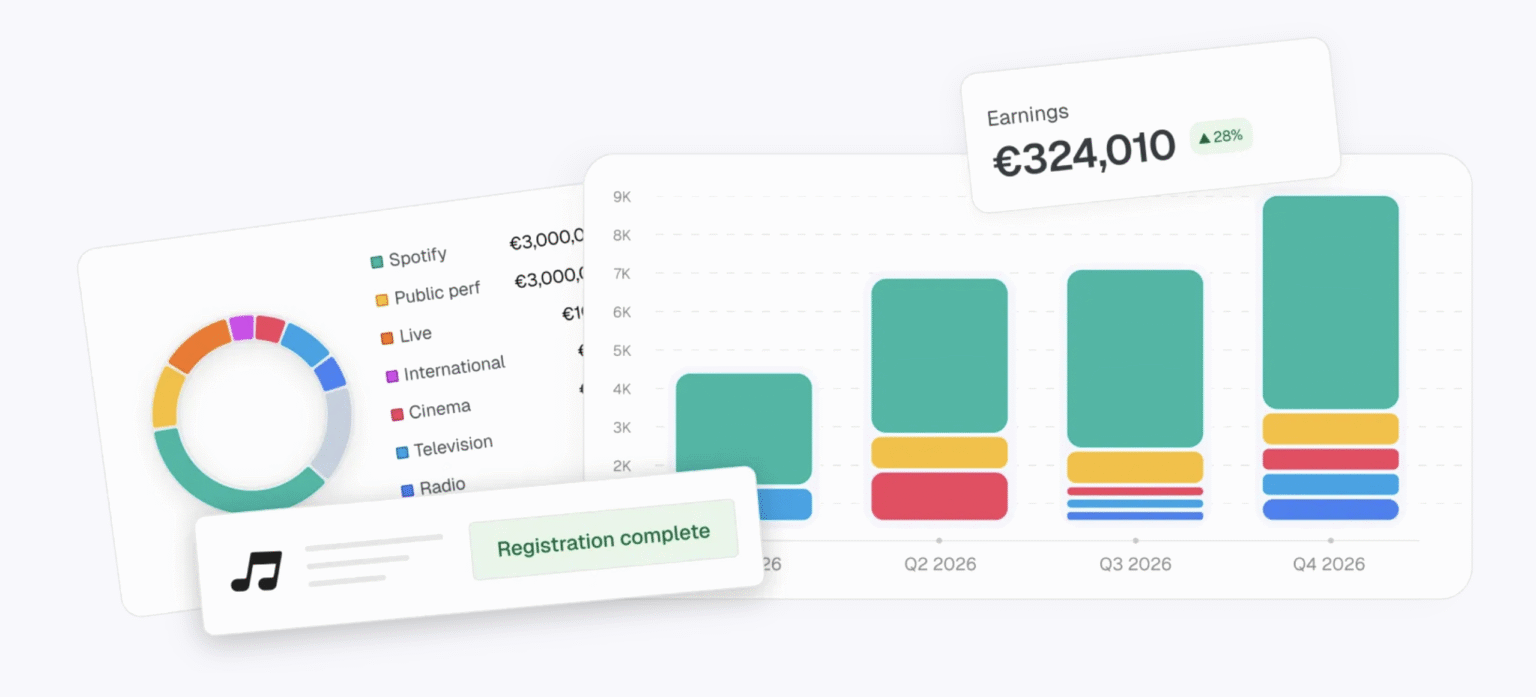
Claimy audits every work in a catalogue, checks whether it’s correctly registered in every active territory, and monitors usage continuously across platforms. Every claim it files comes with a structured evidence pack.
The difference from traditional rights management systems isn’t just speed, though the speed is dramatic. A quarterly audit that used to take a publisher more than four weeks now happens in ten seconds. The deeper difference is coverage and continuity. Traditional systems check some things, sometimes. Claimy checks everything, always.
The Founders: They came from tech. That’s what made the problem visible.
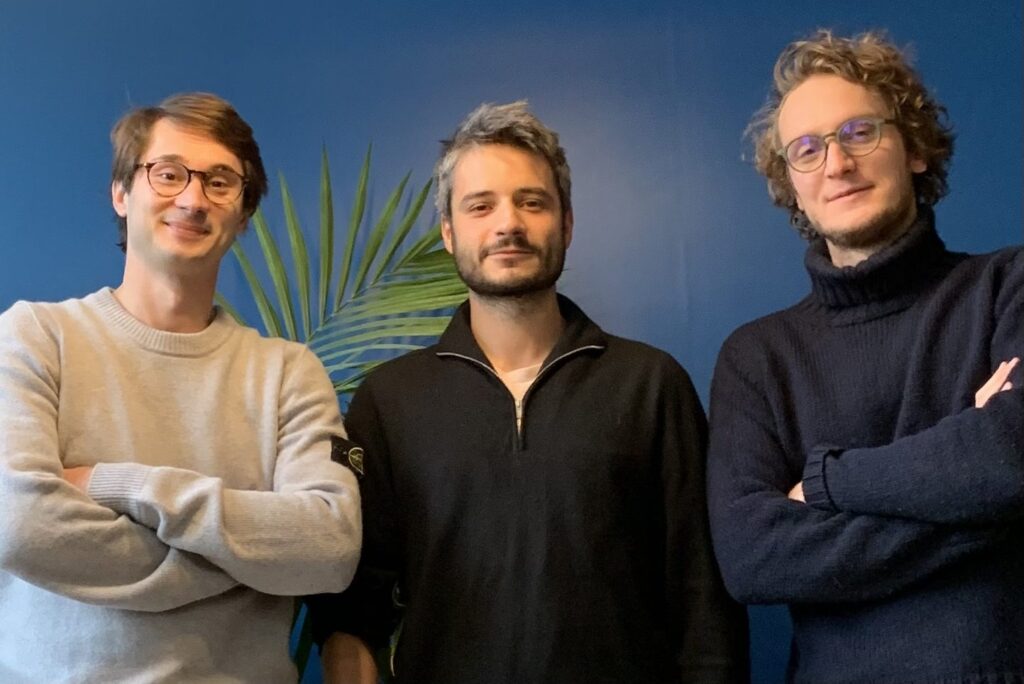
All three Claimy co-founders came out of MWM, a French music-tech company. For years, they negotiated licences with publishers and watched them manage international rights on spreadsheets — trusting systems they had no way to audit.
They weren’t insiders who had accepted the situation as normal. Coming from engineering, operations, and commercial backgrounds, the founders looked at music rights infrastructure with fresh eyes and started questioning why so much of it still relied on manual processes and fragmented data.
That outsider perspective became the company. Télécom Paris’ LISTEN lab brought scientific credibility to the AI work. ESCP, HEC@Station F, and the Agoranov incubator helped shape the company’s business foundations and early growth. The combination was intentional, rigorous enough to withstand the complexity of rights law, practical enough to ship a product publishers could actually use.
Claimy took part in the CultTech Accelerator in 2025, which helped sharpen the go-to-market approach and build early connections within the European music and tech ecosystem.
One client. 25% more royalties. No new hires.
Claimy’s clients recover money they didn’t know they were losing. One client saw a 25% revenue uplift across their catalogue, with no increase in team size.
Beyond the revenue number: for the first time, publishers have full visibility over their catalogue, across every territory, in real time. That’s a different relationship with their own assets. Not just more money, but actual knowledge of what they own and where it’s performing.
The ambition behind the product: a small independent publisher should be able to operate with the same international reach as a major. The gap between those two shouldn’t be a function of how many people you can afford to hire.
“We identified over 200 million unclaimed Spotify streams for a single artist’s catalogue. That money existed. It just was not being actioned.”
AI-generated music is arriving at machine speed. The rights question is urgent and largely unanswered.
Claimy’s AI can already detect remixes, sped-up tracks, and AI-generated songs that incorporate protected content. That capability matters now — and it’s going to matter a lot more. AI music is being uploaded to streaming platforms faster than any human review system can process it.
Claimy is running a CIFRE research thesis at Télécom Paris, specifically on detecting protected content in AI-generated productions. The research is happening inside the company, not outside it — because the answers need to be practical, not theoretical.
The conviction driving that work: AI should empower rights holders, not erode their ownership. Whether the industry arrives at that outcome depends on whether the infrastructure exists to enforce it.
Publishing catalogues are financial assets now. They need institutional-grade infrastructure.
Investment funds are acquiring music publishing catalogues. That’s a relatively new development — and it changes what “rights management” needs to mean. When a catalogue is a financial asset on a fund’s balance sheet, the accuracy and reporting standards required are institutional. Spreadsheets and quarterly audits don’t meet that bar.
At the same time, publishers need to scale internationally without scaling their teams. Both pressures — institutional rigor and operational efficiency — are pushing toward the same solution.
The European context adds a third tailwind. The EU AI Act and copyright directives are forcing platforms to take rights seriously in ways they never had to before. Europe also has the densest network of collecting societies in the world — and they’re increasingly open to tech partnerships. Regulation, for once, is moving in the right direction.
The signal mattered as much as the capital.
Claimy raised €1.5M in October 2025. In the weeks that followed, over 150 companies reached out. The funding announcement did something beyond providing capital — it made the category legible to people who hadn’t been paying attention.
Three priorities for the next 12–18 months: broader territory coverage, deeper AI detection capabilities, and US expansion. They’re already live in the US, with first clients signed. That matters because it validates something fundamental — the problem they’re solving is not a French problem. It’s everywhere.
The longer vision: infrastructure for publishing rights worldwide. Every work registered. Every usage detected. Every royalty reaching its owner.
Claimy is already integrated with 20 collecting societies. The goal is to make the entire system work better, for everyone inside it.
The money exists. It just needs somewhere to go.
Learn more about Claimy:
Website: www.claimy.co
LinkedIn (Company): linkedin.com/company/claimy
LinkedIn (Pierre-Alban Mulliez): linkedin.com/in/pierre-alban-mulliez